According to SPER Market Research, the Global Cloud Telecommunications AI Market is estimated to reach USD 34.98 billion by 2034 with a CAGR 21.97%.
Introduction and Overview
The report includes an in-depth analysis of the Global Cloud Telecommunications AI Market, including market size and trends, product mix, Applications, and supplier analysis.
The global Cloud Telecommunications AI Market was valued at USD 4.8 billion in 2024 and is expected to grow at a CAGR of over 21.97% from 2025 to 2034. The market is experiencing strong growth due to the convergence of artificial intelligence (AI) and cloud computing within the telecommunications sector. This integration helps telecom operators enhance operational efficiency, automate customer support, and introduce advanced digital services. Rising demand for high-speed connectivity, expanding smart device usage, and the rollout of 5G are further accelerating adoption. Government initiatives also play a key role, with agencies in the U.S., Europe, and India supporting AI and cloud infrastructure development. The COVID-19 pandemic further highlighted the need for scalable and resilient communication networks.
By Component:
Based on components, the cloud telecommunications AI market is categorized into solutions and services, with the solutions segment emerging as the dominant contributor to overall market growth. This leadership is driven by rising demand for integrated AI platforms that enhance both network performance and organizational efficiency. Telecom operators are increasingly adopting AI-based solutions to automate processes, minimize manual workloads, and improve service reliability. As networks become more complex, AI plays a vital role in managing real-time traffic, detecting outages, and optimizing performance. Furthermore, widespread adoption of AI across industries is strengthening its importance in telecom operations, service optimization, and future network advancements.
By organization size:
By organization size, the market is classified into small and medium-sized enterprises and large enterprises, with large enterprises leading the market in revenue share. Their dominance is driven by strong financial capacity, higher technology adoption, and the need to manage complex, large-scale telecom networks. These networks require advanced AI-driven automation, security, and predictive analytics for efficient performance and resource management. The growing use of generative AI is further enhancing customer engagement through virtual assistants and chatbots, enabling faster issue resolution, personalized services, and improved operational efficiency across telecom operations.
By Technology:
Based on technology, the cloud telecommunications AI market is segmented into machine learning, natural language processing, big data, deep learning, and others. Big data held a significant market share in 2024, while the services segment is expected to grow at a strong rate during the forecast period. Machine learning plays a core role in telecom AI adoption by enabling the analysis of large data volumes, identifying patterns, and supporting predictive decision-making. It helps operators optimize network performance, reduce complexity, forecast maintenance needs, and enhance customer experience. Leading telecom companies are modernizing their data systems using cloud-based ML platforms to improve agility, efficiency, and service reliability.
By End User:
By end use, the cloud telecommunications AI market is segmented into telecom operators, internet service providers, and managed service providers, with telecom operators holding the leading market position. Telecom companies are widely adopting AI-powered cloud solutions to enhance network operations, automate customer support, and strengthen fraud detection. The growing use of AI-driven chatbots and virtual assistants is enabling faster issue resolution and personalized customer interactions. This automation improves customer satisfaction while lowering service-related operational costs. Widespread AI adoption across telecom networks is also driving revenue growth, cost efficiency, and the evolution of next-generation digital communication services.
Regional Insights:
In 2024, the United States led the North American cloud telecommunications AI market in terms of revenue. The country also holds a substantial share of the global market, driven by strong investments in fifth-generation network infrastructure and advanced AI technologies. Major telecom providers such as Verizon, AT&T, and T-Mobile continue to expand nationwide network coverage, strengthening market leadership. Government support has further accelerated growth through large-scale infrastructure funding aimed at improving network efficiency and scalability. In addition, leading cloud service providers like AWS, Microsoft Azure, and Google Cloud play a crucial role by delivering advanced AI-driven telecom solutions and supporting ongoing innovation through national AI development initiatives.
Market Competitive Landscape:
The Cloud Telecommunications AI Market is highly consolidated. Some of the market key players are Alphabet, Amazon Web Services (AWS), ATOS, IBM, Microsoft, Nvidia, Oracle, Salesforce, SAP SE, and Tencent.
Recent Developments:
• In March 2025, Tata Communications launched Vayu, an AI-powered cloud platform for enterprises that uses analytics, automation, and predictive maintenance to improve telecom operations.
• In January 2025, TCS partnered with Google Cloud to expand its AI and GenAI solutions for the telecom and media sector, aiming to enhance smart network management and customer experience through AI-driven digital transformation.
Scope of the report:
Report Metric Details
Market size available for the years 2021-2034
Base year considered 2024
Forecast Period 2025-2034
Segments Covered By Component, By Technology, By Organization size, By Deployment, By End Use
Regions Covered North America, Latin America, Asia-Pacific, Europe, and Middle East & Africa
Companies Covered Alphabet, Amazon Web Services (AWS), ATOS, IBM, Microsoft, Nvidia, Oracle, Salesforce, SAP SE, and Tencent.
Key Topics Covered in the Report
• Global Cloud Telecommunications AI Market Size (FY’2021-FY’2034)
• Overview of Global Cloud Telecommunications AI Market
• Segmentation of Global Cloud Telecommunications AI Market By Component (Solution, Services)
• Segmentation of Global Cloud Telecommunications AI Market By Technology (Machine learning, Natural Language Processing (NLP), Big data, Deep learning, Others)
• Segmentation of Global Cloud Telecommunications AI Market By Organization Size (Small & Medium-sized Enterprises (SME), Large Enterprises)
• Segmentation of Global Cloud Telecommunications AI Market By Deployment (On-premises, Cloud)
• Segmentation of Global Cloud Telecommunications AI Market By End Use (Telecom Operators, Mobile Network Operators (MNOs), Fixed line operators, Satellite operators, Internet Service Providers (ISPs), Broadband ISPs, Wireless ISPs, Managed Service Providers (MSPs), Cloud service providers, Network management providers)
• Statistical Snap of Global Cloud Telecommunications AI Market
• Expansion Analysis of Global Cloud Telecommunications AI Market
• Problems and Obstacles in Global Cloud Telecommunications AI Market
• Competitive Landscape in the Global Cloud Telecommunications AI Market
• Details on Current Investment in Global Cloud Telecommunications AI Market
• Competitive Analysis of Global Cloud Telecommunications AI Market
• Prominent Players in the Global Cloud Telecommunications AI Market
• SWOT Analysis of Global Cloud Telecommunications AI Market
• Global Cloud Telecommunications AI Market Future Outlook and Projections (FY’2025-FY’2034)
• Recommendations from Analyst
Global Cloud Telecommunications AI Market Size- By Component, By Technology, By Organization size, By Deployment, By End Use- Regional Outlook, Competitive Strategies and Segment Forecast to 2034
1. Introduction
1.1. Scope of the report
1.2. Market segment analysis
2. Research Methodology
2.1. Research data source
2.1.1. Secondary Data
2.1.2. Primary Data
2.1.3. SPER’s internal database
2.1.4. Premium insight from KOL’s
2.2. Market size estimation
2.2.1. Top-down and Bottom-up approach
2.3. Data triangulation
3. Executive Summary
4. Market Dynamics
4.1. Driver, Restraint, Opportunity and Challenges analysis
4.1.1. Drivers
4.1.2. Restraints
4.1.3. Opportunities
4.1.4. Challenges
5. Market variable and outlook
5.1. SWOT Analysis
5.1.1. Strengths
5.1.2. Weaknesses
5.1.3. Opportunities
5.1.4. Threats
5.2. PESTEL Analysis
5.2.1. Political Landscape
5.2.2. Economic Landscape
5.2.3. Social Landscape
5.2.4. Technological Landscape
5.2.5. Environmental Landscape
5.2.6. Legal Landscape
5.3. PORTER’s Five Forces
5.3.1. Bargaining power of suppliers
5.3.2. Bargaining power of buyers
5.3.3. Threat of Substitute
5.3.4. Threat of new entrant
5.3.5. Competitive rivalry
5.4. Heat Map Analysis
6. Competitive Landscape
6.1. Global Cloud Telecommunications AI Market Manufacturing Base Distribution, Sales Area, Product Type
6.2. Mergers & Acquisitions, Partnerships, Product Launch, and Collaboration in Global Cloud Telecommunications AI Market
7. Global Cloud Telecommunications AI Market, By Component, (USD Million) 2021-2034
7.1. Solution
7.1.1. Network optimization
7.1.2. Network security
7.1.3. Customer analytics
7.1.4. Virtual assistants
7.1.5. Fraud detection
7.1.6. Predictive maintenance
7.1.7. Others
7.2. Services
7.2.1. Professional Services
7.2.2. Managed Services
7.2.3. Consulting & Training
8. Global Cloud Telecommunications AI Market, By Technology, (USD Million) 2021-2034
8.1. Machine learning
8.2. Natural Language Processing (NLP)
8.3. Big data
8.4. Deep learning
8.5. Others
9. Global Cloud Telecommunications AI Market, By Organization Size, (USD Million) 2021-2034
9.1. Small & Medium-sized Enterprises (SME)
9.2. Large Enterprises
10. Global Cloud Telecommunications AI Market, By Deployment, (USD Million) 2021-2034
10.1. On-premises
10.2. Cloud
11. Global Cloud Telecommunications AI Market, By End Use, (USD Million) 2021-2034
11.1. Telecom Operators
11.2. Mobile Network Operators (MNOs)
11.3. Fixed line operators
11.4. Satellite operators
11.5. Internet Service Providers (ISPs)
11.6. Broadband ISPs
11.7. Wireless ISPs
11.8. Managed Service Providers (MSPs)
11.9. Cloud service providers
11.10. Network management providers
12. Global Cloud Telecommunications AI Market, (USD Million) 2021-2034
12.1. Global Cloud Telecommunications AI Market Size and Market Share
13. Global Cloud Telecommunications AI Market, By Region, 2021-2034 (USD Million)
13.1. Asia-Pacific
13.1.1. Australia
13.1.2. China
13.1.3. India
13.1.4. Japan
13.1.5. South Korea
13.1.6. Rest of Asia-Pacific
13.2. Europe
13.2.1. France
13.2.2. Germany
13.2.3. Italy
13.2.4. Spain
13.2.5. United Kingdom
13.2.6. Rest of Europe
13.3. Middle East and Africa
13.3.1. Kingdom of Saudi Arabia
13.3.2. United Arab Emirates
13.3.3. Qatar
13.3.4. South Africa
13.3.5. Egypt
13.3.6. Morocco
13.3.7. Nigeria
13.3.8. Rest of Middle-East and Africa
13.4. North America
13.4.1. Canada
13.4.2. Mexico
13.4.3. United States
13.5. Latin America
13.5.1. Argentina
13.5.2. Brazil
13.5.3. Rest of Latin America
14. Company Profile
14.1. Alphabet
14.1.1. Company details
14.1.2. Financial outlook
14.1.3. Product summary
14.1.4. Recent developments
14.2. Amazon Web Services (AWS)
14.2.1. Company details
14.2.2. Financial outlook
14.2.3. Product summary
14.2.4. Recent developments
14.3. ATOS
14.3.1. Company details
14.3.2. Financial outlook
14.3.3. Product summary
14.3.4. Recent developments
14.4. IBM
14.4.1. Company details
14.4.2. Financial outlook
14.4.3. Product summary
14.4.4. Recent developments
14.5. Microsoft
14.5.1. Company details
14.5.2. Financial outlook
14.5.3. Product summary
14.5.4. Recent developments
14.6. Nvidia
14.6.1. Company details
14.6.2. Financial outlook
14.6.3. Product summary
14.6.4. Recent developments
14.7. Oracle
14.7.1. Company details
14.7.2. Financial outlook
14.7.3. Product summary
14.7.4. Recent developments
14.8. Salesforce
14.8.1. Company details
14.8.2. Financial outlook
14.8.3. Product summary
14.8.4. Recent developments
14.9. SAP SE
14.9.1. Company details
14.9.2. Financial outlook
14.9.3. Product summary
14.9.4. Recent developments
14.10. Tencent
14.10.1. Company details
14.10.2. Financial outlook
14.10.3. Product summary
14.10.4. Recent developments
14.11. Others
15. Conclusion
16. List of Abbreviations
17. Reference Links
a
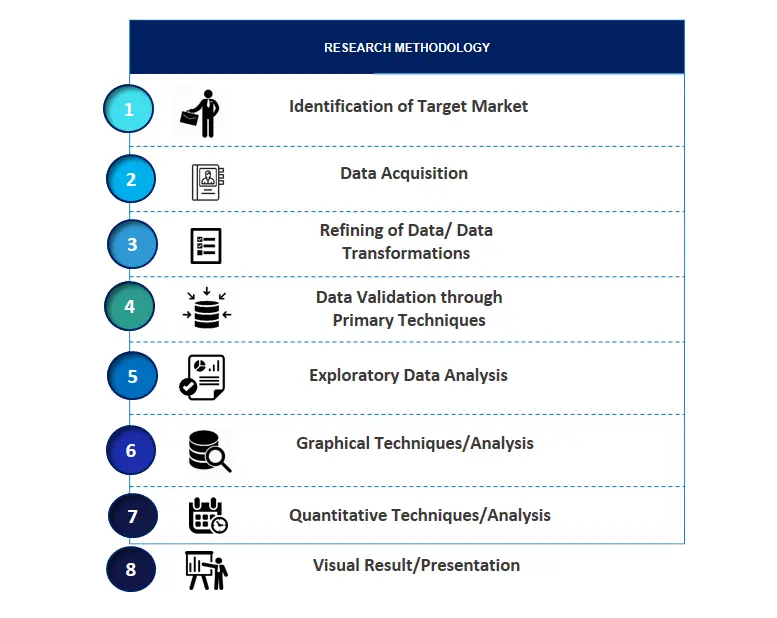
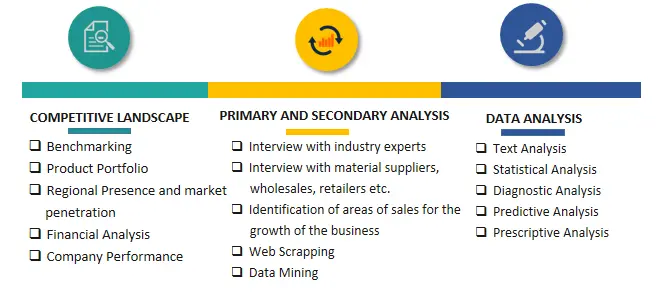
SPER Market Research’s methodology uses great emphasis on primary research to ensure that the market intelligence insights are up to date, reliable and accurate. Primary interviews are done with players involved in each phase of a supply chain to analyze the market forecasting. The secondary research method is used to help you fully understand how the future markets and the spending patterns look likes.
The report is based on in-depth qualitative and quantitative analysis of the Product Market. The quantitative analysis involves the application of various projection and sampling techniques. The qualitative analysis involves primary interviews, surveys, and vendor briefings. The data gathered as a result of these processes are validated through experts opinion. Our research methodology entails an ideal mixture of primary and secondary initiatives.